The AIgorythm project

Playwright and actor
Novelist
Italian-Peruvian naturalist and geographer
Singer and percussionist
Last Inca emperor

Politician, former prime Minister
Journalist and TV host
Poet
Inca warrior
Biophysicist
Doctor and researcher
Singer and songwriter
Film director, Berlin Golden Bear winner

Football player

Writer and journalist
Chess player
Industrialist

Former general
Specialist in public health
Mathematician and engineer
Neurologist and anthropologist
Painter
Football player
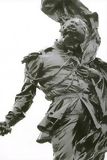
National hero, military leader

Fashion designer

Singer-songwriter
Marathon runner
Indigenous Peruvian chronicler
Writer and television host
Folk musician
Poet and guerrilla
Chef, known for fusion cuisine
Poet and artist
Peruvian tennis player
Football coach
Leader of the indigenous rebellion
Military hero

Latin singer
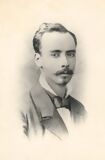
War of the Pacific hero
The youngest mother in history
Politician

Creole music singer
Tennis player

Musician
Politician and founder of the Christian Democratic Party
Founder of Sodalitium Christianae Vitae
Archaeologist and anthropologist
Television host

Actress and singer
Contemporary sculptor
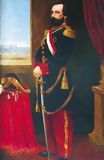
Military figure and historical figure

Fashion photographer
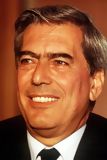
Writer, Nobel Prize in Literature, Politician
Revolutionary leader
Leader of the indigenous rebellion

Musician from Gaia band
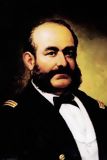
War hero
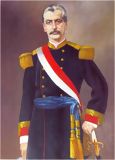
Military leader and politician
Chef, known for Nikkei cuisine
Television personality
Writer

Football player
Inventor and aerospace pioneer
Soldier and inventor
TV presenter and actress
Actor
Writer and historian
Archaeologist, founder of Caral site
Monk and Saint
Saint, patron of Latin America
Oncologist

Singer, Latin Grammy winner

Singer
Actress
Painter
Inca leader
Archbishop, saint

Former head of secret services
Popular singer

Fashion designer
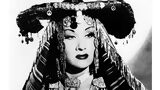
Exotic music singer
Antonio Raimondi was born on September 19, 1826, in Milan, Italy. He was a renowned naturalist, geographer, and explorer who moved to Peru in 1850, where he developed the majority of his scientific career. Raimondi is known for dedicating his life to studying the geography, biodiversity, and natural resources of Peru, significantly contributing to the scientific understanding of the country. His most important work, El Perú, is a comprehensive study of the country's geography and resources, which remains a key reference in the field.
Raimondi was trained in natural sciences in his native Italy, where he studied botany, zoology, and geology. His curiosity about the natural world led him to travel to Peru in 1850, where he found a country rich in biodiversity but relatively unexplored scientifically. Shortly after his arrival, Raimondi became integrated into the local scientific community and began conducting expeditions to various regions of the country, collecting samples and documenting his discoveries.
Over the course of more than 30 years, Antonio Raimondi traveled across almost the entire Peruvian territory, from the coast to the Amazon, passing through The Andes. During his explorations, he gathered vast amounts of information about the country's flora, fauna, geology, and mineral resources. Raimondi is remembered not only for his scientific rigor but also for his passion for sharing knowledge. He published numerous articles and studies on his discoveries, and his work was instrumental in laying the foundation for modern geography in Peru.
One of his most notable contributions was the identification and description of several new species of plants and animals, as well as his study of the country's minerals and natural resources. Raimondi was also an advocate for the conservation of natural resources and promoted the idea of sustainable exploitation, a forward-thinking approach for his time.
In 1874, Antonio Raimondi published the first part of his monumental work El Perú, a comprehensive study of the geography, natural resources, and social conditions of the country. Throughout several volumes, Raimondi described in detail Peru's natural regions, from the coastal deserts to the dense Amazon jungle. His work became an essential reference for scientists, geographers, and scholars interested in learning more about Peru's natural and cultural wealth.
El Perú remains one of the most significant contributions to the knowledge of the country, not only for the vast amount of information collected but also for the methodical and scientific approach Raimondi used in his study.
Antonio Raimondi passed away on October 26, 1890, in San Pedro de Lloc, Peru, but his legacy lives on. His dedication to science and exploration left an indelible mark on Peru, where he is remembered as one of the great pioneers of scientific knowledge. Several educational and scientific institutions in Peru bear his name, and his work continues to be studied by new generations of scientists and academics.
Antonio Raimondi was a man of science whose love for Peru and its natural wealth led him to dedicate his life to studying and exploring the country. His discoveries and his monumental work on Peru's geography and natural resources remain a key reference in the country's scientific history. His legacy endures not only in his writings but also in the impact he had on shaping a new generation of scientists and in the conservation of Peru's biodiversity.