
The AIgorythm project

Playwright and actor
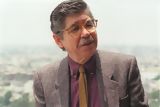
Novelist
Italian-Peruvian naturalist and geographer
Singer and percussionist
Last Inca emperor

Politician, former prime Minister
Journalist and TV host
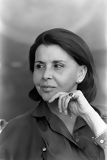
Poet
Inca warrior
Biophysicist
Doctor and researcher
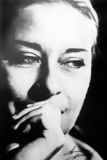
Singer and songwriter
Film director, Berlin Golden Bear winner

Football player
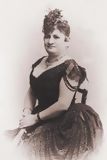
Writer and journalist
Chess player
Industrialist
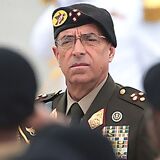
Former general
Specialist in public health
Mathematician and engineer
Neurologist and anthropologist
Painter
Football player
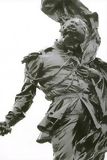
National hero, military leader

Fashion designer

Singer-songwriter
Marathon runner
Indigenous Peruvian chronicler
Writer and television host
Folk musician
Poet and guerrilla
Chef, known for fusion cuisine
Poet and artist
Peruvian tennis player
Football coach
Leader of the indigenous rebellion
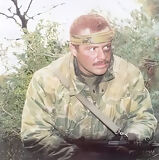
Military hero

Latin singer
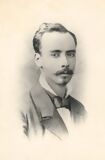
War of the Pacific hero
The youngest mother in history
Politician
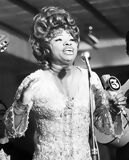
Creole music singer
Tennis player
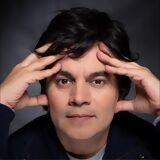
Musician
Politician and founder of the Christian Democratic Party
Founder of Sodalitium Christianae Vitae
Archaeologist and anthropologist
Television host

Actress and singer
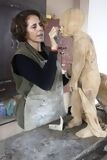
Contemporary sculptor
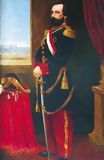
Military figure and historical figure
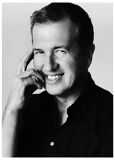
Fashion photographer
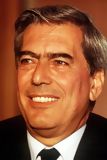
Writer, Nobel Prize in Literature, Politician
Revolutionary leader
Leader of the indigenous rebellion

Musician from Gaia band
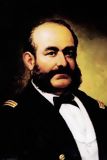
War hero
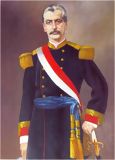
Military leader and politician
Chef, known for Nikkei cuisine
Television personality
Writer

Football player
Inventor and aerospace pioneer
Soldier and inventor
TV presenter and actress
Actor
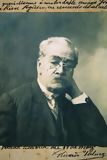
Writer and historian
Archaeologist, founder of Caral site
Monk and Saint
Saint, patron of Latin America
Oncologist
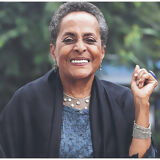
Singer, Latin Grammy winner

Singer
Actress
Painter
Inca leader
Archbishop, saint
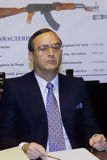
Former head of secret services
Popular singer

Fashion designer
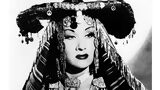
Exotic music singer
Federico Villarreal Villarreal was born on August 3, 1850, in Túcume, Lambayeque, Peru. He was a prominent Peruvian mathematician, engineer, and politician, known for his significant contributions in the field of exact sciences and his role in the development of education in Peru. Throughout his life, Villarreal made a lasting impact on Peruvian academia, excelling as both a teacher and a mathematical researcher.
Federico Villarreal was born into a modest family in northern Peru, but this did not prevent him from developing an interest in knowledge from an early age. During his childhood, he demonstrated an exceptional talent for mathematics, which allowed him to enter the National University of San Marcos in Lima, where he studied engineering and mathematics. At university, he quickly stood out for his intellectual brilliance, particularly in areas such as geometry and algebra.
His passion for exact sciences led him to obtain several academic degrees, making him one of the first Peruvian mathematicians to conduct original research in the field of pure mathematics. Despite the technological and resource limitations of his time, Villarreal managed to produce contributions that positioned Peruvian mathematics on an international level.
Federico Villarreal is primarily remembered for his significant contributions to mathematics. Among his most notable works were his research on differential equations and his contributions to number theory. Villarreal also advanced the field of geometry, being recognized for his studies in projective geometry and linear algebra. His work in these fields was pioneering in Latin America and placed Peru on the international scientific map.
One of Villarreal's most remarkable achievements was solving a geometry problem that had puzzled European mathematicians of his time. Through his research, Villarreal demonstrated that Peruvian mathematicians could compete at an international level, and his contributions were recognized in several scientific publications abroad.
In addition to his work as a researcher, Federico Villarreal dedicated much of his life to teaching. He was a professor at several higher education institutions in Peru, including the National University of San Marcos and the School of Engineers of Peru (now the National University of Engineering). Through his teaching, Villarreal trained generations of mathematicians and engineers who would later follow in his footsteps in the academic and professional world.
Villarreal was a strong advocate for the importance of mathematics in the country's development and championed the creation of educational programs that promoted the study of exact sciences. His commitment to education led him to actively participate in Peru's educational reform, being one of the key proponents of modernizing university curricula in the country.
Throughout his life, Federico Villarreal was also involved in politics, using his training as an engineer and mathematician to contribute to the country's development. He held several public positions where he promoted infrastructure and modernization projects, particularly in the field of public works. His knowledge of civil engineering allowed him to participate in the construction of important infrastructure that contributed to Peru's economic and social development.
Moreover, Villarreal consistently advocated for the importance of science and technology in public policy, arguing that the country's progress depended on strong education and investment in scientific research. His forward-thinking ideas made him an influential figure both in academia and in the political sphere.
Federico Villarreal remained active in academia and politics until his final years. He passed away on June 3, 1923, leaving an immense legacy in Peru. Today, he is remembered not only for his contributions to mathematics and engineering but also for his dedication to education and the country's progress. His name lives on in the academic world, with several institutions and awards bearing his name, such as the National University Federico Villarreal, founded in his honor.
Federico Villarreal was a pioneer in the field of mathematics in Peru and a staunch advocate for the importance of education and science for the country's development. His contributions in the fields of pure mathematics, engineering, and politics make him a central figure in the history of science and education in Peru. His legacy lives on through the institutions that bear his name and through the generations of scientists and academics who continue to draw inspiration from his example.