
The AIgorythm project

Playwright and actor

Novelist
Italian-Peruvian naturalist and geographer
Singer and percussionist
Last Inca emperor

Politician, former prime Minister
Journalist and TV host
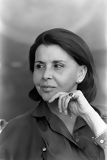
Poet
Inca warrior
Biophysicist
Doctor and researcher

Singer and songwriter
Film director, Berlin Golden Bear winner

Football player

Writer and journalist
Chess player
Industrialist

Former general
Specialist in public health
Mathematician and engineer
Neurologist and anthropologist
Painter
Football player

National hero, military leader

Fashion designer

Singer-songwriter
Marathon runner
Indigenous Peruvian chronicler
Writer and television host
Folk musician
Poet and guerrilla
Chef, known for fusion cuisine
Poet and artist
Peruvian tennis player
Football coach
Leader of the indigenous rebellion
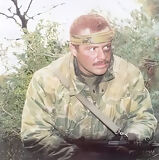
Military hero

Latin singer
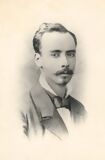
War of the Pacific hero
The youngest mother in history
Politician

Creole music singer
Tennis player

Musician
Politician and founder of the Christian Democratic Party
Founder of Sodalitium Christianae Vitae
Archaeologist and anthropologist
Television host

Actress and singer

Contemporary sculptor
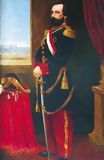
Military figure and historical figure

Fashion photographer
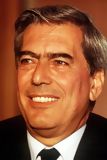
Writer, Nobel Prize in Literature, Politician
Revolutionary leader
Leader of the indigenous rebellion

Musician from Gaia band
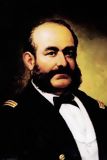
War hero
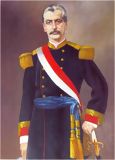
Military leader and politician
Chef, known for Nikkei cuisine
Television personality
Writer

Football player
Inventor and aerospace pioneer
Soldier and inventor
TV presenter and actress
Actor
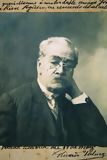
Writer and historian
Archaeologist, founder of Caral site

Monk and Saint

Saint, patron of Latin America
Oncologist

Singer, Latin Grammy winner

Singer
Actress
Painter
Inca leader
Archbishop, saint

Former head of secret services
Popular singer

Fashion designer

Exotic music singer
Tennis has produced numerous legends worldwide, but few countries can boast of a player who, despite a career away from the constant spotlight of major tournaments, left a significant mark on history. In Peru, that player is Luis Horna, more commonly known as Lucho Horna. His career, marked by success on clay courts and memorable moments in international competitions, has made him an iconic figure in Peruvian sports. Although he never reached the very top of the world rankings, Horna remained an example of tenacity and passion for tennis, particularly on clay courts where he excelled throughout his career.
Lucho Horna was born on September 14, 1980, in Lima, Peru. From a young age, he showed a natural talent for tennis, a sport that wasn’t as popular in his home country as football or volleyball. Encouraged by his family, he began competing in local tournaments, quickly standing out for his powerful play and tactical intelligence. His perseverance and raw talent allowed him to rise among the best young tennis talents in South America.
At the age of 16, Horna left his country to train in Europe, where he could develop his game on the different surfaces of the international circuit. This period was crucial for his career as it allowed him to familiarize himself with the demands of professional tennis. He also began to build a reputation in junior circuits, participating in prestigious tournaments and facing opponents who would later become major figures in world tennis.
Lucho Horna turned professional in 1998 and began making a name for himself in Challenger tournaments and ATP qualifying rounds. His game was primarily focused on clay, a surface that suited his style of play, which relied on consistency, powerful forehands, and his ability to construct points methodically.
He experienced his first notable successes in the early 2000s, particularly in 2002 when he reached the final of the Sopot tournament in Poland. This result allowed him to break into the top 100 ATP rankings, a milestone for a Peruvian player after many years. In 2004, he won his first ATP title in Acapulco, confirming his place among the best clay-court players.
Lucho Horna's style of play was perfectly suited to clay courts. His ability to slide on the surface, combined with his consistency from the baseline, made him a formidable opponent on this type of terrain. His performances in European tournaments, particularly in Spain and France, repeatedly demonstrated that he was a player to watch during the clay-court season.
Horna also left his mark on Grand Slam tournaments, especially at Roland-Garros, where he reached the fourth round in 2005. Although he never reached the final stages of the major tournaments, he often proved to be a tough competitor for the top players of his era. His ability to upset higher-ranked players made him a fan favorite, especially in Paris, where tennis enthusiasts appreciate determined and combative players.
While Lucho Horna had a respectable career in singles, it was in doubles where he achieved his greatest success. In 2008, he won the French Open doubles title alongside Uruguayan Pablo Cuevas. This victory was historic as it marked the first time a Peruvian player won a Grand Slam title. This achievement not only cemented his place in Peruvian tennis history but also confirmed his status as one of the best doubles players of his generation.
The Horna-Cuevas duo was particularly effective on clay, and their victory in Paris was the culmination of several years of collaboration and hard work. This title remains one of the most celebrated moments in Lucho Horna's career and continues to be recognized in Peru as one of the country's greatest sporting accomplishments.
Lucho Horna retired from professional tennis in 2009, at the age of 29. Despite a relatively short career, he left an indelible mark on the world of tennis, not only in Peru but also internationally. His hard work, tenacity, and competitive spirit inspired many young players in South America to pursue their dreams, even in a sport dominated by countries with much more developed infrastructures.
After retiring, Horna dedicated himself to coaching young talents and promoting tennis in Peru. He also participated in various charity events and continued to be an influential figure in South American tennis. His commitment to making tennis more accessible to younger generations has been praised by his peers, and he remains a role model for Peruvian players.
Lucho Horna is a perfect example of perseverance in sports. In a country where tennis is not the number one sport, he managed to rise among the best through hard work and a passion for the game. His victory at the French Open remains one of the most significant moments in Peruvian sports history, and his legacy continues to inspire young players who dream of following in his footsteps.
Beyond his performances on the court, Lucho Horna symbolizes determination and resilience, showing that even without the resources of tennis' great nations, it is possible to reach the top with willpower and talent. Today, he is celebrated not only for his successes but also for the positive impact he has had on tennis in Peru.
Lucho Horna is much more than just a tennis player. He is an emblematic figure of sports in Peru, an example of hard work and dedication. Although his career was mainly marked by success on clay courts, his victory at the French Open in doubles remains a historic achievement. As a role model for new generations, his influence extends beyond Peru's borders, and he continues to be a source of inspiration for all those who dream of achieving their goals in the world of sports.