
The AIgorythm project

Playwright and actor

Novelist
Italian-Peruvian naturalist and geographer
Singer and percussionist
Last Inca emperor

Politician, former prime Minister
Journalist and TV host

Poet
Inca warrior
Biophysicist
Doctor and researcher

Singer and songwriter
Film director, Berlin Golden Bear winner

Football player

Writer and journalist
Chess player
Industrialist

Former general
Specialist in public health
Mathematician and engineer
Neurologist and anthropologist
Painter
Football player
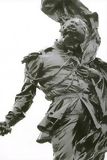
National hero, military leader

Fashion designer

Singer-songwriter
Marathon runner
Indigenous Peruvian chronicler
Writer and television host
Folk musician
Poet and guerrilla
Chef, known for fusion cuisine
Poet and artist
Peruvian tennis player
Football coach
Leader of the indigenous rebellion

Military hero

Latin singer

War of the Pacific hero
The youngest mother in history
Politician

Creole music singer
Tennis player

Musician
Politician and founder of the Christian Democratic Party
Founder of Sodalitium Christianae Vitae
Archaeologist and anthropologist
Television host

Actress and singer

Contemporary sculptor

Military figure and historical figure

Fashion photographer

Writer, Nobel Prize in Literature, Politician
Revolutionary leader
Leader of the indigenous rebellion

Musician from Gaia band

War hero
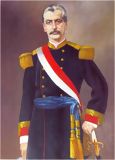
Military leader and politician
Chef, known for Nikkei cuisine
Television personality
Writer

Football player
Inventor and aerospace pioneer
Soldier and inventor
TV presenter and actress
Actor

Writer and historian
Archaeologist, founder of Caral site
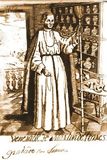
Monk and Saint
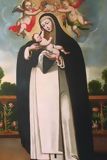
Saint, patron of Latin America
Oncologist

Singer, Latin Grammy winner

Singer
Actress
Painter
Inca leader
Archbishop, saint

Former head of secret services
Popular singer

Fashion designer
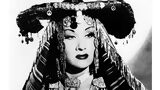
Exotic music singer
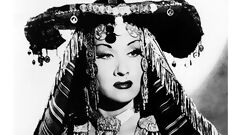
Yma Sumac, whose real name was Zoila Augusta Emperatriz Chávarri del Castillo, was born on September 13, 1922, in Ichocán, in the Cajamarca region of Peru. She is known as one of the greatest singers of the 20th century, particularly famous for her exceptional voice and incredible vocal range that spanned more than four octaves. Her ability to move effortlessly between the lowest and highest notes earned her the nickname "The Diva of The Andes".
Yma Sumac grew up in a mountainous region of Peru where traditional Andean music was an integral part of local culture. From a young age, her unique voice stood out. According to some legends, she was a direct descendant of the Inca emperor Atahualpa, which inspired her stage name, "Yma Sumac", meaning "How Beautiful!" in Quechua.
In the 1940s, Yma Sumac left Peru for the United States, where she hoped to pursue an international career. In 1950, she signed a contract with Capitol Records, and her first album, Voice of the Xtabay, was an immediate success. Her extraordinary voice and exotic style captivated critics and audiences alike.
What particularly distinguished Yma Sumac was her incredible vocal range. She could sing deep contralto notes as well as high soprano ones. Some experts even claimed that her voice spanned more than four octaves, a rare achievement for any singer.
Yma Sumac became one of the iconic figures of the exotica genre, a musical style that sought to capture the essence of distant, exotic lands. She collaborated with great composers like Les Baxter, with whom she produced several successful albums.
In addition to her musical career, Yma Sumac made a few appearances in film and television. She acted in films like Secret of the Incas (1954), in which she performed several songs. These appearances further reinforced her public image as a mystical and exotic "Inca princess".
In the 1970s and 1980s, Yma Sumac’s career experienced a resurgence, largely due to the rediscovery of the exotica genre. Modern artists began sampling her recordings, and her works were re-released, helping to keep her influence alive.
Yma Sumac remains a musical legend, known for her exceptional vocal talent and her ability to fuse Andean and Western cultures. Her contribution to global music is undeniable, and she is celebrated as an iconic figure of Peruvian culture.